The Science Behind Custom Blending Solutions in Food Manufacturing

Understanding Custom Blending Solutions in Food Manufacturing
Defining Custom Blending Solutions
Custom blending solutions deliver precise mixtures of food ingredients tailored to specific product needs in manufacturing. These services combine raw materials like spices, flavors, and stabilizers into consistent blends that meet exact specifications for texture, taste, and shelf life. Manufacturers rely on custom blending services to create unique formulations that standard off-the-shelf products cannot achieve. The process starts with client input on desired outcomes, followed by recipe development and testing in controlled environments. Custom blends support everything from snack coatings to sauce bases, ensuring each batch aligns with production goals. Solutions for blending emphasize accuracy through automated scales and mixers that reduce variation. This approach gives food and beverage producers greater control over ingredient interactions while streamlining supply chains.
Importance of Custom Blending in Food Ingredients
Custom blending plays a central role in optimizing food ingredients for commercial use. It allows manufacturers to adjust ratios of proteins, fibers, and additives to improve nutritional profiles or functional properties without compromising flavor. Many operations turn to custom blending solutions because they reduce waste and speed up product development cycles. Precise blends ensure uniform distribution of components, which supports consistent quality across large runs. Food ingredients sourced through these methods often perform better in downstream applications like extrusion or emulsification. Companies gain competitive edges by developing proprietary mixes that differentiate their offerings in crowded markets. This targeted approach also helps manage costs by incorporating seasonal or alternative ingredients effectively.
Overview of the Custom Blending Process
The custom blending process follows a structured sequence from concept to delivery. Teams first analyze client requirements for particle size, moisture content, and compatibility among food ingredients. Next, specialists source and pre-test components before scaling up in pilot mixers. Custom blending solutions incorporate validation steps such as sensory evaluation and microbial checks to confirm stability. Once approved, production moves to dedicated lines equipped for batch production. Final blends undergo packaging and labeling that meet traceability standards. This methodical workflow minimizes errors and supports rapid iteration when formulas require adjustment. Manufacturers benefit from end-to-end oversight that aligns blending with overall production schedules.
The Science of Blending: Ingredients and Innovations
Chemical Interactions in Food Ingredients
Chemical interactions among food ingredients determine the success of any blend. Proteins may form gels or bind water depending on pH and temperature, while lipids influence mouthfeel and oxidation rates. Custom blending solutions account for these reactions by selecting compatible components and applying controlled processing conditions. Maillard browning, for instance, creates desired flavors but requires careful timing to avoid off-notes. Emulsifiers stabilize oil-water interfaces in dressings and spreads. Understanding these dynamics lets formulators predict shelf-life behavior and adjust recipes proactively. Science guides every decision, from antioxidant addition to enzyme activity management, ensuring blends deliver reliable performance in finished products.
Technological Innovations in Custom Blending
Technological innovations continue to advance custom blending capabilities. High-shear mixers and inline sensors now monitor viscosity and temperature in real time, allowing immediate corrections during production. Automated systems track ingredient lots for full traceability, which strengthens quality assurance. Custom blending solutions integrate software that models ingredient compatibility before physical trials begin. Advances in microencapsulation protect sensitive compounds like vitamins from degradation. These tools reduce development time and improve repeatability across batches. Manufacturers adopt such innovations to handle complex requests involving multiple functional food ingredients while maintaining high throughput.
Utilizing Juice Concentrates in Beverage Blends
Juice concentrates serve as concentrated sources of flavor, color, and natural sugars in beverage blends. Custom blending solutions incorporate these concentrates to achieve consistent brix levels and acidity without excess water weight. Formulators balance concentrates with stabilizers to prevent sedimentation during storage. Beverage manufacturers value the clean-label appeal of juice concentrates while controlling costs through reduced shipping volumes. Blending techniques ensure even dispersion of pulp particles and volatile aroma compounds. Proper handling preserves nutritional value and prevents microbial growth. This application demonstrates how custom solutions for blending enhance product differentiation in the competitive beverage sector.
Packaging Considerations for Custom Blends
Primary vs. Secondary Packaging in Food Manufacturing
Primary packaging directly contacts the blend and must protect against moisture, oxygen, and light to preserve ingredient integrity. Materials such as multi-layer films or rigid containers often serve this role for custom blends. Secondary packaging provides additional support during shipping and storage, grouping units for handling efficiency. Manufacturers select both layers based on product characteristics and distribution channels. Proper differentiation between primary and secondary packaging prevents damage and extends shelf life for sensitive food ingredients. Labels on primary layers include lot codes and allergen information required for compliance. This dual system maintains product quality from production through retail display.
The Role of Flexible Packaging for Custom Blends
Flexible packaging offers advantages for custom blending solutions by custom blending solutions by ELIS Manufacturing & Packaging Solutions Inc reducing material use and transportation weight. Pouches and bags conform to product volume, minimizing headspace that can accelerate spoilage. Barrier properties in these materials shield against environmental factors that degrade flavors or nutrients. Many operations choose flexible packaging because it supports resealable features that improve consumer convenience. Custom blends packaged this way often fit efficiently into retail shelves and foodservice formats. The versatility of flexible options accommodates varying batch sizes without major equipment changes. Manufacturers gain sustainability benefits while maintaining protection standards for diverse food ingredients.
Regulatory Standards: USDA and GFSI Compliance
USDA and GFSI standards shape packaging choices for custom blending solutions in manufacturing. USDA guidelines cover labeling accuracy and organic claims when applicable, while GFSI benchmarks require documented hazard controls throughout the supply chain. Facilities implement traceability systems that link each packaged blend back to ingredient sources. Audits verify that primary and secondary packaging materials meet migration limits and do not introduce contaminants. Compliance drives investments in validated processes and supplier approvals. Meeting these requirements protects brand reputation and opens access to major retail and export markets for food and beverage products.
Batch Production and Efficiency in Custom Blending
Optimizing Batch Production Techniques
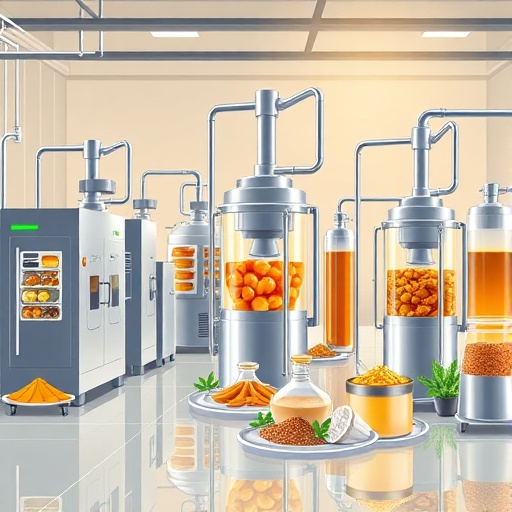
Optimizing batch production techniques improves throughput for custom blending solutions. Operators sequence similar formulas to reduce changeover times and clean-in-place cycles. Precise weighing systems and programmable logic controllers maintain recipe accuracy across runs. Equipment calibration ensures uniform mixing regardless of batch size. Manufacturers analyze historical data to predict optimal mixing durations and speeds for different ingredient combinations. This focus on efficiency supports just-in-time delivery while controlling energy consumption. Refined techniques also lower labor requirements and scrap rates during scale-up from development to full production.
Quality Control Measures in Custom Blending
Quality control measures verify that every batch meets specifications before release. In-process checks include particle size analysis, moisture testing, and sensory panels. Laboratories run microbial and chemical assays on finished blends to confirm safety and consistency. Custom blending solutions incorporate statistical process control to detect deviations early. Documentation tracks deviations and corrective actions for continuous improvement. These protocols reduce recall risks and build customer confidence in the reliability of supplied blends. Regular third-party audits further validate that controls align with industry expectations for food ingredients.
Impact of Custom Solutions for Blending on Manufacturing Efficiency
Custom solutions for blending enhance overall manufacturing efficiency by aligning ingredient preparation with downstream processes. Pre-mixed blends cut handling steps and reduce the chance of dosing errors on production lines. Shorter lead times result from consolidated sourcing of multiple food ingredients through one supplier. Facilities report higher yields because blends arrive ready for immediate use. Efficiency gains also appear in inventory management, as fewer individual components require storage space. These improvements free resources for innovation and capacity expansion while maintaining strict quality standards across the operation.